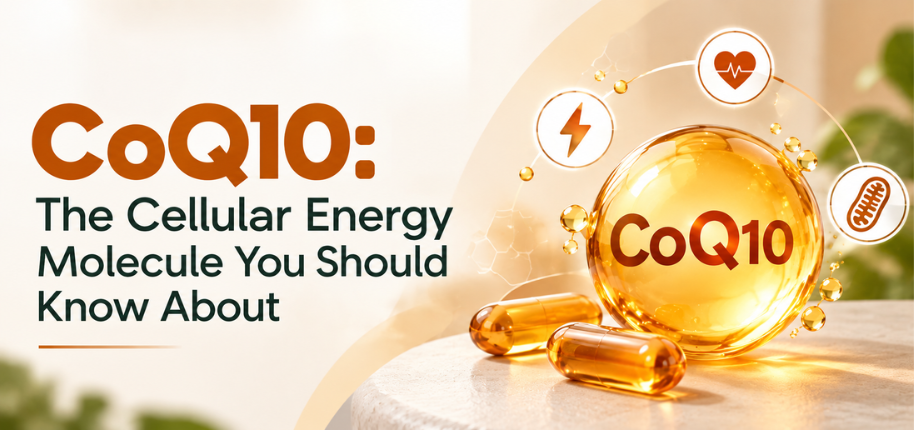
Feeling tired is often blamed on a busy schedule, poor sleep or stress. But behind the scenes, every cell in your body is constantly working to produce and use energy.
One molecule that plays an important role in this process is Coenzyme Q10, better known as CoQ10.
CoQ10 is naturally produced by the body and is found throughout the body, with particularly high levels in organs such as the heart, liver, kidneys and pancreas. It is involved in energy production inside cells and also has antioxidant properties.
But what exactly does CoQ10 do, where does it come from, and why is it commonly used in nutritional supplements?
Let's take a closer look.
What Is CoQ10?
Coenzyme Q10 is a naturally occurring compound found in the body's cells.
Think of it as one of the small but important components involved in the process through which cells produce usable energy.
CoQ10 exists mainly in two forms:
- Ubiquinone – the oxidized form
- Ubiquinol – the reduced form
The body naturally converts between these forms as part of normal cellular processes.
Because CoQ10 is involved in cellular energy production and antioxidant activity, it has become a popular ingredient in nutritional and wellness supplements.
CoQ10 and Cellular Energy Production
This is where CoQ10 becomes particularly interesting.
Inside many of your cells are structures called mitochondria. They are often described as the cell's energy-producing machinery because they help convert nutrients from food into ATP, the molecule cells use as energy.
CoQ10 participates in the mitochondrial electron transport chain, helping transfer electrons during the process involved in ATP production.
In simple terms:
Food ? Nutrients ? Cellular processes ? ATP ? Usable energy
CoQ10 is one of the molecules involved along the way.
That doesn't mean taking CoQ10 automatically makes someone feel more energetic. Rather, it explains why CoQ10 is biologically important to normal cellular function.
Why Are Mitochondria So Important?
Your body has trillions of cells, and those cells require energy for countless everyday processes.
Muscles need energy to move. Nerve cells need energy to communicate. Organs need energy to perform their normal functions.
Mitochondria are central to this energy-producing process.
This is why nutrients and compounds involved in mitochondrial function continue to attract attention in nutrition and health research.
CoQ10 is one such compound because of its role in the electron transport chain.
CoQ10 Also Has Antioxidant Properties
Energy production is not the only reason CoQ10 is interesting.
CoQ10 also functions as an antioxidant, particularly in its reduced form, ubiquinol. Antioxidants are involved in protecting cells from oxidative damage caused by highly reactive molecules produced during normal biological activity.
However, antioxidant does not automatically mean that a supplement will prevent or treat a disease.
Research on CoQ10 supplements for different health conditions has produced mixed or inconclusive results, so it is important not to confuse its biological role with proven treatment benefits.
Can Your Body Make CoQ10 Naturally?
Yes.
The human body naturally produces CoQ10.
It can also be obtained in smaller amounts through food. Foods containing CoQ10 include certain meats, fish and whole grains, among other dietary sources.
The amount obtained from food is generally much smaller than the amounts commonly found in supplements, which is one reason CoQ10 is available as a standalone nutritional supplement.
What Foods Contain CoQ10?
CoQ10 occurs naturally in a variety of foods.
Some commonly discussed dietary sources include:
Fish
Fish such as salmon and other oily fish contain CoQ10 along with other nutrients.
Meat
Meat and organ meats can contain naturally occurring CoQ10.
Nuts and Seeds
Some nuts and seeds provide smaller amounts of CoQ10 and can also contribute healthy fats and other nutrients to the diet.
Vegetables
Certain vegetables, including spinach and broccoli, contain CoQ10 in smaller quantities.
A varied diet remains the foundation of good nutrition. CoQ10-rich foods can simply be part of an overall balanced eating pattern.
Ubiquinone vs Ubiquinol: What's the Difference?
If you have ever looked at a CoQ10 supplement label, you may have noticed the words ubiquinone or ubiquinol.
These are two forms of CoQ10.
Ubiquinone is the oxidized form, while ubiquinol is the reduced form.
Both are naturally involved in the body's CoQ10 cycle. Some supplement formulations use ubiquinol because research indicates differences in bioavailability between formulations, although the choice of form is only one factor to consider when evaluating a product.
So when comparing products, don't look only at the front label. Check the actual form, amount, formulation and other product information.
Why Is CoQ10 Used in Supplements?
CoQ10 supplements are generally positioned around its role in:
- Cellular energy production
- Mitochondrial function
- Antioxidant activity
- General nutritional support
But supplement marketing can sometimes make ingredients sound more powerful than the available evidence supports.
CoQ10 has been studied for several health conditions, but evidence varies depending on the condition and intended use. For example, research into heart disease and heart failure has not produced definitive conclusions, while research in other areas remains limited.
That's why responsible product communication matters.
What Should You Look for in a CoQ10 Supplement?
If you're evaluating a CoQ10 product, start with the label rather than the marketing claims.
Look for:
1. Clearly Stated CoQ10 Form
Check whether the product contains ubiquinone or ubiquinol.
2. Clearly Mentioned Quantity
The amount of CoQ10 should be clearly stated per serving.
3. Complete Ingredient Information
Look beyond CoQ10 and check the full ingredient list, capsule material, excipients and other added ingredients.
4. Manufacturer Information
A transparent label should clearly identify the manufacturer or marketer and provide relevant product information.
5. Storage Instructions
Follow the storage conditions mentioned on the product label.
6. Appropriate Product Claims
Be cautious about products making exaggerated promises such as guaranteeing energy, reversing ageing or treating diseases.
A good supplement label should help consumers understand what the product contains, rather than relying entirely on promotional language.
Is CoQ10 Safe?
CoQ10 is generally considered well tolerated, although mild side effects such as digestive upset or insomnia can occur.
More importantly, supplements can interact with medicines.
CoQ10 may interact with warfarin and insulin, and there may be concerns with certain cancer treatments. Anyone taking medication or managing a medical condition should discuss supplement use with a qualified healthcare professional.
This is particularly important because a supplement being available over the counter does not mean it is appropriate for everyone.
The Bigger Picture: CoQ10 and Cellular Health
CoQ10 is interesting because its importance begins at a very basic level: the cell.
It participates in mitochondrial energy production and also has antioxidant activity. Your body produces it naturally, while smaller amounts can also come from food.
But understanding the biology of an ingredient is different from proving that a supplement can treat a particular health problem.
That distinction is important when reading health claims, comparing supplements or developing nutritional products.
For consumers and healthcare businesses alike, the better approach is to look at the ingredient, formulation, evidence, label information and intended use together.
CoQ10 at Agrosaf Pharmaceuticals
At Agrosaf Pharmaceuticals, we offer CoQ10-based nutraceutical products as part of our healthcare portfolio. Our CoQ10 formulations can be explored by healthcare businesses looking to add cellular wellness and antioxidant-focused products to their range.
Final Thoughts
CoQ10 may sound like a complex scientific ingredient, but its basic role is easier to understand: it is naturally present in the body and participates in cellular energy production and antioxidant processes.
Its growing presence in nutritional supplements reflects increasing interest in cellular and mitochondrial health.
However, choosing a CoQ10 product should go beyond simply looking at the ingredient name. Form, dosage, formulation, quality information and appropriate product communication all matter.
Understanding what is actually inside a supplement is the first step toward making a more informed choice.
Frequently Asked Questions
What is CoQ10?
CoQ10, or Coenzyme Q10, is a naturally occurring compound involved in mitochondrial energy production and antioxidant activity.
What does CoQ10 do in the body?
CoQ10 participates in the mitochondrial electron transport chain, which is involved in producing ATP, the main energy-carrying molecule in cells. It also has antioxidant properties.
What foods contain CoQ10?
CoQ10 occurs naturally in foods including certain fish, meats, whole grains and some plant foods.
What is the difference between ubiquinone and ubiquinol?
Ubiquinone is the oxidized form of CoQ10, while ubiquinol is its reduced form. Both are naturally involved in the body's CoQ10 cycle.
Is CoQ10 a vitamin?
No. CoQ10 is not classified as a vitamin, although it is a vitamin-like compound naturally produced by the body.
Is CoQ10 suitable for everyone?
Not necessarily. CoQ10 may interact with certain medicines, including warfarin and insulin. People taking medication or managing a health condition should consult a healthcare professional before using it.
Conclusion / Notes
CoQ10 is a naturally occurring compound involved in mitochondrial electron transport, cellular energy production and antioxidant activity. Understanding its biological role can help consumers make more informed decisions about CoQ10 supplements.
0 Comments
Recent Posts