Introduction
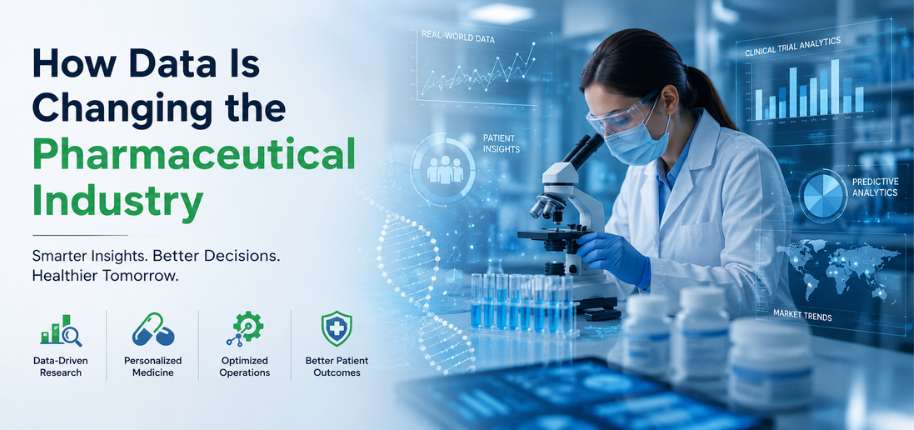
The pharmaceutical industry is becoming increasingly data-driven. From understanding market trends and improving supply chains to enhancing customer experiences and accelerating healthcare innovation, data is reshaping the way pharmaceutical businesses operate.
Today, pharmaceutical companies are no longer relying solely on traditional business practices. Instead, they are leveraging data to make informed decisions, optimize operations, and identify emerging market opportunities.
As healthcare continues to evolve, businesses that embrace data-driven strategies are better positioned to remain competitive and deliver greater value to their customers and partners.
In this blog, we'll explore how data is changing the pharmaceutical industry and why it has become one of the most valuable assets in modern healthcare.
Table of Contents
- Why Data Matters in the Pharmaceutical Industry
- How Pharmaceutical Companies Use Data
- Benefits of Data-Driven Decision Making
- Data's Role in Supply Chain Management
- The Future of Data in Healthcare and Pharma
- Why Businesses Choose Innovative Healthcare Partners
- Frequently Asked Questions (FAQs)
- Conclusion
Why Data Matters in the Pharmaceutical Industry
The pharmaceutical industry generates enormous amounts of data every day. This includes information related to consumer behavior, healthcare trends, inventory management, product demand, market performance, and supply chain operations.
When used effectively, data enables pharmaceutical businesses to:
- Make smarter business decisions.
- Improve operational efficiency.
- Understand changing healthcare trends.
- Enhance customer experiences.
- Identify new growth opportunities.
- Improve product availability and planning.
Data-driven businesses are often more agile and better prepared to respond to market changes.
How Pharmaceutical Companies Use Data
Modern pharmaceutical businesses are using data across multiple functions to improve performance and drive innovation.
Market Trend Analysis
Data helps businesses understand emerging healthcare trends, consumer preferences, and growing product categories.
This allows companies to develop strategies that align with changing market demands.
Demand Forecasting
Predictive analytics and historical data enable businesses to forecast demand more accurately.
Benefits include:
- Reduced stock shortages.
- Improved inventory planning.
- Better procurement decisions.
- Increased operational efficiency.
Supply Chain Optimization
Data-driven supply chain management helps pharmaceutical companies monitor inventory levels, delivery timelines, and supplier performance.
Efficient supply chains contribute significantly to customer satisfaction and business growth.
Customer Insights
Understanding customer behavior allows businesses to improve their product offerings and strengthen relationships with distributors, healthcare professionals, and business partners.
Data helps answer important questions such as:
- Which healthcare categories are growing fastest?
- What products are customers actively seeking?
- What market opportunities are emerging?
Business Performance Tracking
Data allows pharmaceutical companies to monitor key business metrics such as:
- Sales performance.
- Product demand.
- Market expansion opportunities.
- Customer engagement.
- Supply chain efficiency.
This enables businesses to make informed and strategic decisions.
Benefits of Data-Driven Decision Making
Businesses that adopt data-driven strategies gain several competitive advantages.
Improved Business Efficiency
Data enables faster and more accurate decision-making across operations.
Better Customer Experience
Understanding customer needs helps businesses deliver better products and services.
Increased Market Competitiveness
Data provides valuable insights into industry trends and emerging opportunities.
Enhanced Supply Chain Performance
Real-time data improves inventory planning and logistics management.
Smarter Growth Strategies
Businesses can identify profitable product categories and expand into new markets more confidently.
Data's Role in Supply Chain Management
Supply chain efficiency has become increasingly important in the pharmaceutical industry.
Data-driven supply chain management helps businesses:
- Predict demand fluctuations.
- Improve inventory management.
- Reduce delivery delays.
- Optimize logistics operations.
- Enhance product availability.
By leveraging data, pharmaceutical businesses can improve both operational performance and customer satisfaction.
The Future of Data in Healthcare and Pharma
The future of the pharmaceutical industry will be driven by data, technology, and innovation.
Emerging technologies such as:
- Artificial Intelligence (AI)
- Predictive Analytics
- Digital Healthcare Platforms
- Business Intelligence Tools
- Healthcare Data Analytics
are transforming the way pharmaceutical companies operate.
Businesses that invest in data-driven strategies today are more likely to succeed in tomorrow's healthcare ecosystem.
Why Businesses Choose Innovative Healthcare Partners
Healthcare businesses increasingly seek partners that prioritize innovation, quality, and long-term growth.
Agrosaf Pharmaceuticals supports evolving healthcare needs through a diverse portfolio of pharmaceutical, nutraceutical, Ayurvedic, and OTC products. By staying aligned with industry trends and adopting innovative business practices, Agrosaf continues to deliver dependable healthcare solutions that support business growth.
Conclusion
Data is no longer just a business tool. It has become a strategic asset that is transforming every aspect of the pharmaceutical industry.
From improving supply chain efficiency and understanding customer behavior to identifying emerging healthcare opportunities, data-driven decision-making is helping businesses become more agile, competitive, and future-ready.
As the healthcare landscape continues to evolve, pharmaceutical companies that embrace data and innovation will be better positioned to achieve sustainable long-term growth.
Frequently Asked Questions (FAQs)
1. How is data used in the pharmaceutical industry?
Data is used for market analysis, demand forecasting, supply chain management, customer insights, and business performance tracking.
2. Why is data important for pharmaceutical businesses?
Data helps businesses make informed decisions, improve efficiency, identify growth opportunities, and enhance customer experiences.
3. What are the benefits of data-driven decision making in pharma?
Some key benefits include better inventory management, improved operational efficiency, smarter business strategies, and stronger market competitiveness.
4. How does data improve pharmaceutical supply chains?
Data enables businesses to predict demand, optimize logistics, reduce stock shortages, and improve product availability.
5. What is the future of data in healthcare?
The future of healthcare is increasingly data-driven, with technologies such as AI, predictive analytics, and digital healthcare platforms expected to play a major role in shaping the pharmaceutical industry.
Conclusion / Notes
0 Comments
Recent Posts